Kulen Mountain National Park Tour: Hidden the Sacred Mountain& Kampong Plouk Floating Village Kulen Mountain National Park Tour:...

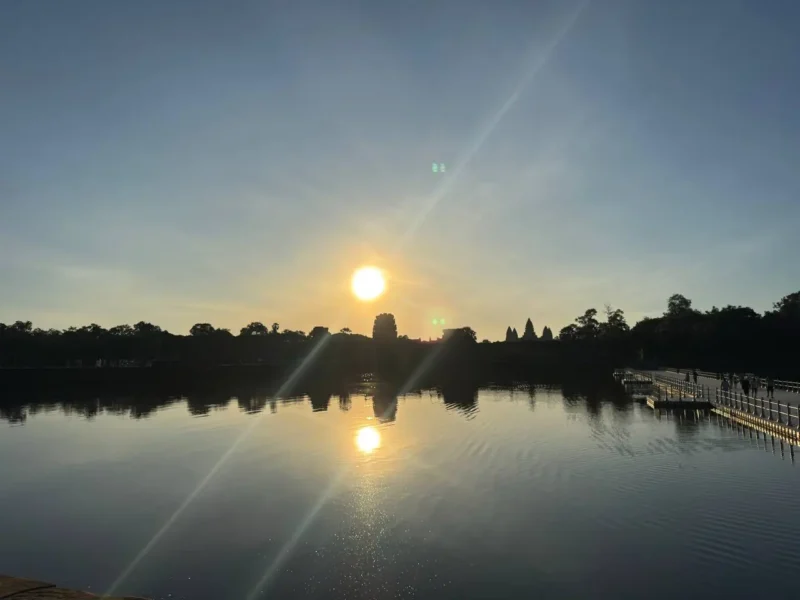
Ultimate Angkor Adventure Itinerary: Discover Sunrise Angkor Wat, A Magical Journey Through History, Mythology, and Architecture, Watching the sunrise at Angkor Wat is one of the most unforgettable experiences in Southeast Asia. As the first rays of sunlight appear on the horizon, the magnificent silhouette of Angkor Wat emerges against the colorful sky, creating a breathtaking scene that has captivated travelers for centuries.
7.Ultimate Angkor Adventure Itinerary: Angkor Wat Temple was built in the early 12th century during the reign of King Suryavarman II, Angkor Wat is the largest religious monument in the world and the crown jewel of the ancient Khmer Empire. Construction began around 1113 AD and continued for several decades. Originally dedicated to the Hindu god Vishnu, the temple later became an important Buddhist sanctuary and remains a symbol of Cambodia’s cultural and spiritual heritage
7.Ultimate Angkor Adventure Itinerary: The Spectacular Sunrise, Before dawn, visitors gather beside the reflecting pools located in front of the western entrance. As darkness slowly fades, the sky transforms into a canvas of colors. Depending on weather conditions, shades of deep purple, soft pink, fiery orange, golden yellow, and brilliant red paint the morning sky.
7.Ultimate Angkor Adventure Itinerary: Discover Sunrise Angkor Wat , Ta Prom, and Floating Village and One of the most magical moments occurs when the colorful sunrise is reflected perfectly in the lotus-shaped pools. The reflection creates a mirror image of Angkor Wat’s iconic five towers, doubling the beauty of the scene. The still water captures the changing colors of the sky, producing one of the most photographed views in the world.
7.Ultimate Angkor Adventure Itinerary: Discover Sunrise Angkor Wat , Ta Prom, and Floating Village, for the ancient Khmer people, the rising sun symbolized rebirth, renewal, and divine power. Today, witnessing sunrise at Angkor Wat allows visitors to connect with the same sense of wonder experienced by people nearly 900 years ago.
King Suryavarman II was one of the greatest rulers of the Khmer Empire. He unified the kingdom, expanded its territory, and initiated the construction of Angkor Wat as both a state temple and his future mausoleum.

7.Ultimate Angkor Adventure Itinerary: Discover Sunrise Angkor Wat , Ta Prom, and Floating Village and the king is immortalized within the temple through one of Angkor Wat’s most famous bas-reliefs, known as the King’s Parade Gallery. This remarkable artwork depicts Suryavarman II seated majestically on a royal throne, surrounded by ministers, military commanders, attendants, and soldiers. The gallery offers a fascinating glimpse into the power, organization, and grandeur of the Khmer Empire during its golden age.
The Churning of the Ocean of Milk
7.Ultimate Angkor Adventure Itinerary: Discover Sunrise Angkor Wat , Ta Prom, and Floating Village, Among Angkor Wat’s most celebrated carvings is the magnificent “Churning of the Ocean of Milk” gallery. This masterpiece illustrates a famous Hindu myth explaining the creation of the nectar of immorality, The scene features 88 demons (Asuras) and 92 gods (Devas) pulling a giant serpent named Vasuki in opposite directions.
The serpent is wrapped around Mount Mandara, which serves as a churning rod. At the center stands Lord Vishnu, supervising the cosmic event.The relief extends for nearly 50 meters and contains hundreds of beautifully carved figures. It symbolizes the eternal struggle between good and evil and the quest for immortality and spiritual enlightenment.
The 32 Levels of Hell and 37 Levels of Paradise
Another fascinating gallery illustrates ancient Hindu and Buddhist beliefs about the afterlife. Visitors can observe detailed carvings representing 32 levels of hell and 37 levels of paradise.The hell scenes portray punishments for various sins, with individuals facing consequences based on their actions during life. These vivid carvings served as moral lessons, encouraging people to live virtuously.
In contrast, the paradise scenes depict heavenly realms filled with beauty, happiness, celestial beings, and divine rewards. Together, these galleries reflect the Khmer understanding of karma, morality, and the spiritual journey after death.
The Hall of 1,000 Buddhas
Inside the temple stands the famous Hall of 1,000 Buddhas, also known as Preah Poan. Throughout history, pilgrims and worshippers placed hundreds of Buddha statues in this sacred area as offerings of faith and devotion. Although many statues have disappeared over time, the hall remains one of Angkor Wat’s most spiritually significant locations. Visitors can still see Buddha images, incense offerings, and evidence of centuries of religious practice. The peaceful atmosphere makes it a favorite stop for those seeking a deeper connection with the temple’s spiritual heritage.
The Third Level: A View of Heaven
The third level of Angkor Wat represents Mount Meru, the sacred mountain at the center of the universe according to Hindu cosmology. Accessing this upper level requires climbing steep staircases designed to symbolize the difficulty of reaching the realm of the gods.
Those who reach the summit are rewarded with spectacular panoramic views. From the upper terrace, visitors can admire the surrounding forests, temple courtyards, galleries, and distant monuments of the Angkor Archaeological Park. The elevated perspective reveals the temple’s remarkable symmetry and engineering precision. It is often considered the best viewpoint in the entire complex.
The Moat: A Symbol of the Cosmic Ocean
One of Angkor Wat’s most striking features is its enormous moat, which completely surrounds the temple.The moat measures approximately 190 meters wide and forms a rectangle about 1.5 kilometers by 1.3 kilometers. It contains more than five million cubic meters of water and covers nearly 200 hectares. Beyond its practical purpose of stabilizing the temple’s foundations and managing water, the moat holds profound symbolic meaning.
It represents the cosmic ocean surrounding Mount Meru, reinforcing the temple’s design as a model of the universe. At sunrise and sunset, the moat creates stunning reflections of the temple and surrounding landscape. The calm water enhances the sense of serenity and grandeur that defines Angkor Wat.
The Grand Causeway
Crossing the sandstone causeway is an essential part of the Angkor Wat experience. This impressive pathway stretches across the moat and leads visitors toward the temple’s western entrance. As visitors walk along the causeway, they enjoy magnificent views of the lotus-shaped towers rising above the horizon. The approach creates a sense of anticipation and wonder, carefully designed by Khmer architects to inspire awe. Flanking the causeway are naga balustrades, represented by multi-headed serpents that symbolize protection and the bridge between the human and divine worlds.

The History and Legacy of Angkor Wat
Angkor Wat stands as the greatest achievement of Khmer architecture and engineering. Constructed in the 12th century, it required thousands of workers, artisans, sculptors, and engineers.The temple covers approximately 162 hectares, making it the largest religious monument ever built. Its walls are decorated with over 800 meters of intricate bas-reliefs depicting historical events, mythological stories, celestial beings, and religious teachings.
After the decline of the Khmer Empire, Angkor Wat remained an active place of worship, unlike many other temples in the region. Its continuous religious use helped preserve the monument through centuries of political change.Today, Angkor Wat is recognized as a UNESCO World Heritage Site and serves as Cambodia’s national symbol, proudly displayed on the country’s flag.
From the colorful sunrise reflected in the pools to the sacred galleries, towering spires, immense moat, and breathtaking views from the third level, Angkor Wat offers a journey through history, mythology, spirituality, and architectural brilliance. Every stone tells a story, and every sunrise reveals anew why this extraordinary monument continues to inspire visitors from around the world.
Ta Prohm Temple: Where Nature and History Embrace Hidden within the lush forests of northwestern Cambodia, Ta Prohm Temple is one of the most fascinating and photogenic monuments in the world. Unlike many ancient temples that have been carefully restored, Ta Prohm remains largely in the condition in which it was discovered. Massive tree roots wrap around crumbling stone walls, creating a breathtaking scene where nature and history exist together in perfect harmony. This unique combination has made Ta Prohm one of the most visited and admired temples in the Angkor region.
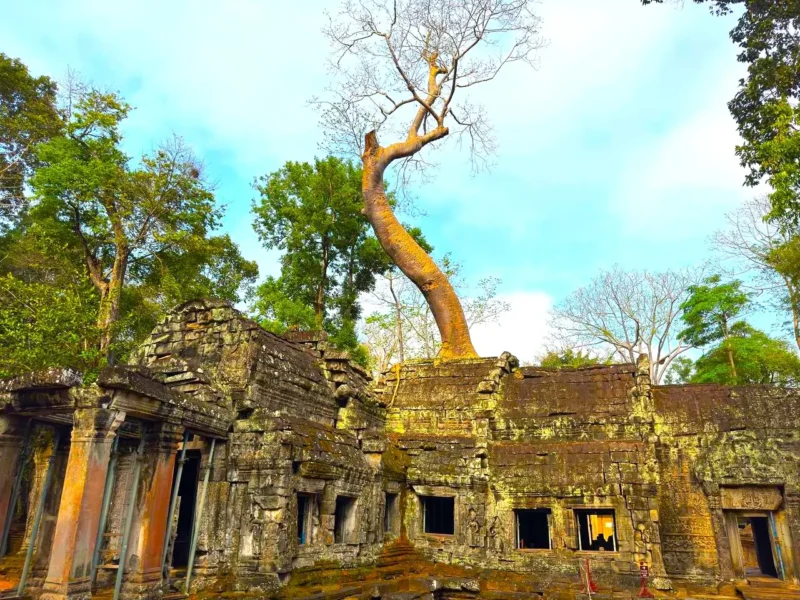
Ta Prohm is located within the magnificent archaeological complex of Angkor near the city of Siem Reap. The temple was built during the golden age of the Khmer Empire and remains a remarkable symbol of Cambodia’s rich cultural heritage. Every year, millions of visitors travel from around the world to witness its magical atmosphere and extraordinary beauty.
The temple was commissioned by King Jayavarman VII, one of the greatest rulers of the Khmer Empire. Construction began around 1186 AD, shortly after the king achieved military victories and expanded his kingdom. Ta Prohm was originally built as a Mahayana Buddhist monastery and university. It was dedicated to the king’s mother, reflecting his deep respect and devotion to his family. Historical inscriptions reveal that the temple once supported thousands of monks, priests, scholars, and workers, making it an important religious and educational center of its time.
During its peak, Ta Prohm was much more than a place of worship. It functioned as a thriving community with extensive resources and support. Ancient records indicate that nearly 80,000 people were involved in maintaining and serving the temple. The complex contained valuable treasures, libraries, shrines, and residential areas. Its wealth and importance demonstrated the extraordinary power and sophistication of the Khmer civilization.

Architecturally, Ta Prohm is a masterpiece of Khmer design. The temple consists of long corridors, intricate galleries, towers, courtyards, and decorative carvings. Visitors can admire delicate stone reliefs depicting Buddhist themes, mythological figures, celestial dancers, and floral patterns. The craftsmanship displayed throughout the temple reflects the artistic excellence achieved during the reign of Jayavarman VII.
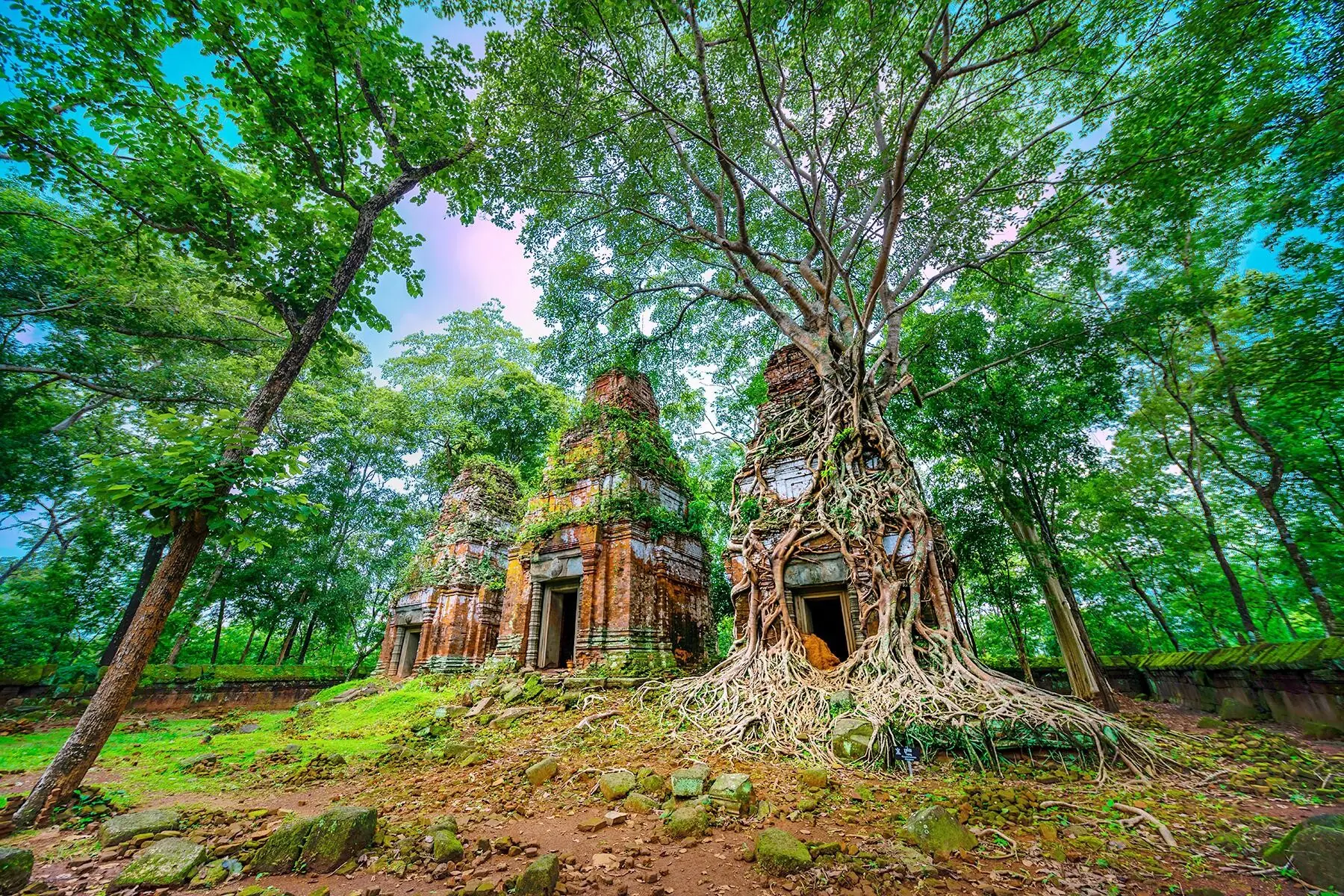
However, what truly distinguishes Ta Prohm from other temples is the remarkable presence of giant trees growing directly on and around the ancient structures. Over centuries, nature gradually reclaimed the abandoned temple after the decline of the Khmer Empire. Enormous silk-cotton trees and strangler fig trees sent their roots deep into the stone foundations. These roots twist and spread across walls, doorways, and towers, creating dramatic scenes that appear almost unreal.
The sight of these giant roots embracing the temple stones is one of the most iconic images in Cambodia. The roots seem to protect the temple while simultaneously challenging its survival. Their powerful grip illustrates the unstoppable force of nature and the passage of time. Rather than removing all the trees during restoration efforts, conservation experts decided to preserve many of them because they contribute to the temple’s unique character and visual appeal.
Walking through Ta Prohm feels like entering a lost world. Sunlight filters through dense jungle canopies, casting moving shadows across ancient corridors. Birds sing from high branches while gentle breezes rustle the leaves overhead. The combination of jungle sounds, weathered stones, and towering roots creates an atmosphere of mystery and wonder. Visitors often describe the experience as stepping into an adventure story or an ancient forgotten kingdom.
The temple gained international fame when it appeared in the 2001 film “Lara Croft: Tomb Raider,” starring Angelina Jolie. The movie introduced Ta Prohm to millions of viewers worldwide and highlighted its dramatic beauty. Since then, the temple has become one of the most photographed destinations in Southeast Asia, attracting travelers, photographers, historians, and nature lovers alike.
One of the greatest attractions of Ta Prohm is its stunning natural scenery. The surrounding jungle provides magnificent views throughout the year. During the early morning, soft golden sunlight illuminates the stone structures and giant roots, creating perfect conditions for photography. In the rainy season, vibrant green vegetation surrounds the temple, enhancing its mystical appearance. The contrast between the gray stone walls and the rich greenery creates a visual masterpiece that captivates every visitor.
The temple’s pathways reveal countless beautiful perspectives. Around every corner, visitors discover new scenes where roots cascade over walls, trees rise from rooftops, and ancient carvings emerge from the shadows. These ever-changing views make each visit unique. No matter how many photographs one has seen beforehand, experiencing Ta Prohm in person is unforgettable.
Today, Ta Prohm stands as a powerful reminder of both human achievement and nature’s enduring strength. It represents the extraordinary accomplishments of the Khmer Empire while also demonstrating how natural forces can transform even the greatest monuments. The temple’s beauty lies not only in its architecture but also in the harmonious relationship between stone and forest.
As visitors explore its ancient halls and jungle-covered courtyards, they connect with centuries of history, spirituality, and cultural heritage. The giant trees, intricate carvings, and peaceful surroundings create an atmosphere unlike any other place in the world. Ta Prohm is more than an ancient temple; it is a living symbol of resilience, mystery, and timeless beauty.
For anyone visiting Cambodia, Ta Prohm offers an unforgettable journey into the heart of history and nature. Its majestic trees, remarkable architecture, and enchanting views continue to inspire wonder and admiration, making it one of the most extraordinary treasures of the Khmer Empire and one of the world’s most captivating archaeological sites.
Discover the Magic of Kampong Phluk Floating Village
Nestled on the edge of the magnificent Tonle Sap Lake in Siem Reap Province, Cambodia, Kampong Phluk Floating Village is one of the country’s most fascinating and authentic destinations. Famous for its towering stilt houses, floating homes, breathtaking lake scenery, traditional fishing culture, and peaceful rural landscapes, Kampong Phluk offers visitors an unforgettable glimpse into a unique way of life that has existed for generations.
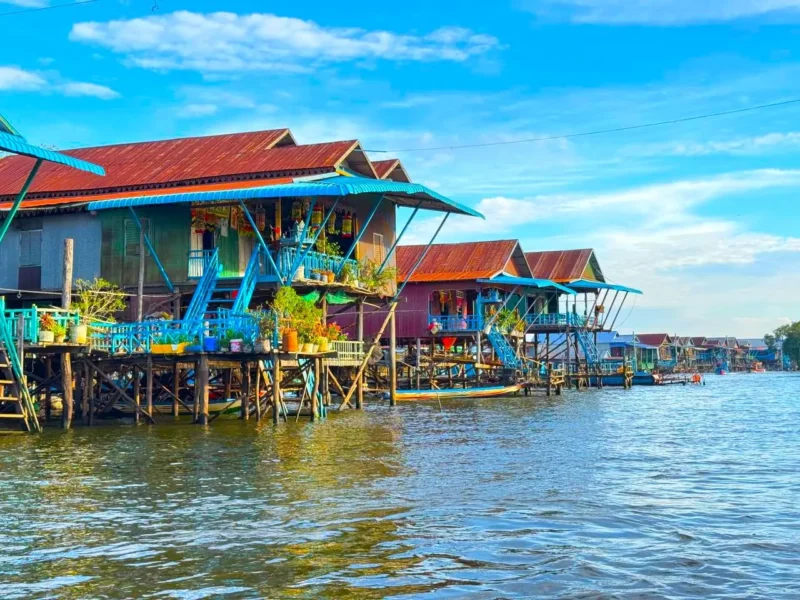
A visit to Kampong Phluk is much more than a simple tour and it is an opportunity to experience the harmony between people and nature in one of Southeast Asia’s most remarkable ecosystems.
Stunning Rice Field Views
The journey to Kampong Phluk begins with beautiful countryside scenery that immediately captures the heart of every traveler. Along the road leading to the village, endless stretches of lush green rice fields create a picture-perfect landscape. During the growing season, the vibrant emerald fields sway gently in the breeze, while during harvest time, the golden rice paddies shine under the Cambodian sun.
Visitors often stop along the way to admire the peaceful rural environment, take photographs, and witness local farmers tending their crops using traditional methods. These rice fields provide a striking contrast to the bustling city life and offer a refreshing experience of Cambodia’s agricultural heritage.
The Famous Stilt Houses
One of the most impressive sights in Kampong Phluk is its extraordinary stilt houses. Rising between six and ten meters above the ground, these remarkable structures are built to withstand the dramatic seasonal changes of Tonle Sap Lake.
During the rainy season, floodwaters rise significantly, transforming the entire area into a vast water world. The elevated houses protect families from flooding while allowing daily life to continue smoothly. During the dry season, visitors can clearly see the enormous wooden stilts supporting the homes, creating a unique and almost surreal landscape.
Walking through the village, travelers can admire the craftsmanship of these traditional wooden houses and gain insight into how local communities have adapted to their environment over many generations.
Unique Floating Houses,As visitors move closer to Tonle Sap Lake, they encounter another fascinating feature of Kampong Phluk—the floating houses. Unlike the stilt houses anchored on land, these homes float directly on the water’s surface and move according to changing water levels.
The floating houses create a vibrant and colorful community where daily life unfolds entirely on the lake. Families live, work, cook, and socialize on floating platforms. Boats serve as the primary means of transportation, replacing cars and motorcycles commonly found in urban areas.Watching children paddle small boats to school and observing families carrying out daily activities on the water offers a truly unique cultural experience that cannot be found in many places around the world.
Floating Restaurants with Spectacular Views
One of the highlights of visiting Kampong Phluk is enjoying a meal at one of the floating restaurants located on Tonle Sap Lake. These charming establishments offer a unique dining experience where guests can savor delicious Cambodian cuisine while surrounded by stunning water views. Fresh fish from the lake is a specialty, prepared using traditional recipes that reflect the rich culinary heritage of the region. Visitors can enjoy local dishes while relaxing on floating decks and watching fishing boats glide across the water.
The peaceful atmosphere, gentle movement of the water, and panoramic scenery create an unforgettable dining experience. Whether enjoying lunch under the bright sun or dinner during a colorful sunset, floating restaurants provide the perfect setting to appreciate the beauty of Tonle Sap Lake.
Exploring the Crocodile Farm
Discover Sunrise Angkor Wat , Ta Prom, and Floating Village, another interesting attraction in Kampong Phluk is the crocodile farm, where visitors can observe these powerful reptiles up close. The farm offers insight into crocodile breeding and conservation practices that have become part of the local economy.Tourists can learn about the life cycle, behavior, and importance of crocodiles in the region while safely viewing them from designated platforms. For many visitors, seeing these fascinating creatures in person adds an exciting element to the village experience.
The crocodile farm also serves as an educational stop, helping travelers better understand the relationship between wildlife and local communities living around Tonle Sap Lake.
Traditional Fishing Lifestyle, Fishing is the heartbeat of Kampong Phluk. For generations, the people of the village have depended on Tonle Sap Lake for their livelihoods. The lake is one of the most productive freshwater fisheries in the world, supporting countless families throughout Cambodia. Visitors can observe fishermen using traditional techniques passed down through generations. Early in the morning and late in the afternoon, fishing boats can be seen navigating the waterways as locals set nets, check traps, and collect their daily catch.

Discover Sunrise Angkor Wat , Ta Prom, and Floating Village,the fishing culture is deeply woven into every aspect of village life. Markets, restaurants, and family activities all revolve around the resources provided by the lake. Learning about this traditional lifestyle offers valuable insight into Cambodia’s rich cultural and economic heritage.
Angkor Wat Temple
(Sunrise at the early morning) or Without sunrise, starting time at 8:00 am
Angkor Wat, the crown jewel of Khmer civilization, was built in the early 12th century during the reign of King Suryavarman II, whose leadership reflected both vision and devotion. Originally constructed as a Hindu temple dedicated to Vishnu, it later embraced Buddhism, symbolizing Cambodia’s dynamic spiritual journey. Covering a vast area of 1.5 kilometers in width and 1.3 kilometers in length, the temple’s scale reflects the ambition of a flourishing empire that once governed a population of nearly a million.
Over centuries, multiple kings ruled Angkor, each leaving their mark through expansions and preservation. The architecture is breathtaking, with towering lotus-shaped towers, intricate galleries, and bas-reliefs depicting epic stories from Hindu mythology. Beyond its religious role, Angkor Wat was also an educational and cultural center, where scholars, monks, and artisans gathered to advance knowledge. Anthropologically, it remains a living testament to Khmer ingenuity, resilience, and identity, bridging past grandeur with present pride.
Ta Prohm Temple
Ta Prohm Temple, built in the late 12th century by the great King Jayavarman VII, is one of Angkor’s most mystical monuments, embodying his strong leadership and deep Buddhist devotion. Dedicated to his mother, the temple was once a vibrant religious and educational center, home to more than 12,000 monks, priests, and scholars, supported by nearly 80,000 villagers from nearby areas. Measuring 145 meters in width and 125 meters in length, Ta Prohm showcases the Bayon style of Khmer architecture with its towers, courtyards, and intricate galleries. What makes it truly unique are the colossal silk-cotton and strangler fig trees that have grown through its walls, giving it the enchanting aura of a temple swallowed by the jungle. Over centuries, various kings influenced Angkor, yet Ta Prohm remains tied to Jayavarman VII’s legacy. Anthropologically, it represents harmony between nature and civilization and has gained global fame as the filming site of Lara Croft: Tomb Raider filmed in 2001.

Kampong Plouk Floating Village
Kampong Plouk Floating Village, nestled on the banks of Tonlé Sap Lake in Cambodia, is a living testament to human resilience, adaptability, and the ability to create harmony with nature. Unlike conventional settlements on land, the village is characterized by its striking stilt houses, which tower dramatically above the ground, some elevated as high as six to ten meters. These wooden structures are ingeniously designed to withstand the seasonal rhythms of the lake, where waters rise and fall dramatically throughout the year. During the dry season, the stilt houses appear like giant wooden legs rooted firmly into the earth, while in the rainy season, they seem to float majestically on the lake, their stilts hidden beneath the water. This architectural feature not only protects families from floods but also reflects the ingenuity of generations who have learned to build with the challenges of their environment in mind.
Complementing the stilted homes is a network of floating infrastructure that supports daily life on water. Floating schools, health centers, restaurants, and even temples drift on the lake, ensuring that the community continues to function seamlessly regardless of water levels. These floating facilities are essential to the rhythm of the village, where boats serve as the primary means of transport and where wooden walkways connect neighbors during low water seasons. The design of this infrastructure demonstrates a perfect blend of practicality and tradition, as it allows villagers to maintain their culture while adapting to the lake’s shifting moods.
Life in Kampong Plouk is uniquely tied to the water, shaping every aspect of daily living. Boats replace bicycles and motorbikes, children learn to row at an early age, and fishing remains not only the primary livelihood but also a cultural identity. Families spend their mornings casting nets or setting traps, afternoons drying or preparing fish for market, and evenings gathered around meals made from the day’s catch. The lake provides everything: food, income, and a natural highway for transportation. Even education takes place on the water, with children paddling to floating schools, their classrooms gently swaying as lessons unfold. The water is not seen as a barrier but as a companion to life, shaping traditions, values, and a strong sense of community among villagers.
Encircling Kampong Plouk is a vast and enchanting mangrove forest, which plays a crucial role in the village’s survival. These mangroves, with their dense roots plunging into the water, act as a protective barrier against erosion, storms, and strong currents. Beyond their ecological function, they provide a habitat for a wide array of wildlife—birds, fish, and amphibians—that enrich the biodiversity of Tonlé Sap Lake. Villagers often guide visitors on boat rides through the shaded mangrove channels, offering a tranquil glimpse of life intertwined with nature. The forest is not only an environmental safeguard but also an educational classroom for children, teaching them the importance of preservation and sustainable living.
The environment of Kampong Plouk is nothing short of dynamic, shifting dramatically with the seasons. During the dry months, the water recedes, exposing the stilts of the houses and transforming the village into a tall forest of wooden legs above cracked earth. In contrast, the rainy season floods the landscape, transforming homes into floating islands and turning the mangroves into a waterworld of green. This cyclical rhythm creates challenges but also instills resilience in the community. Villagers have adapted their lives and livelihoods to these seasonal changes, developing a deep respect for nature’s cycles.
The population of Kampong Plouk, estimated at around 3,000 residents, is a tight-knit community bound by shared experiences and traditions. Families are extended, with multiple generations often living under one roof, passing down knowledge of fishing, boat-building, and stilt-house construction. Though the community is small, it is vibrant and strong, reflecting the ability of people to thrive in environments that might seem inhospitable to outsiders.
Education, while once limited, has become an increasing priority in Kampong Plouk. Floating schools now provide children with access to formal learning, ensuring that the younger generation is not left behind despite the challenges of geography. Subjects range from basic literacy and mathematics to environmental studies, teaching students not only how to read and write but also how to live sustainably with their surroundings. Teachers often travel from nearby towns, and lessons are adjusted to accommodate the realities of life on the water. Education is seen as a bridge to the future, offering children opportunities beyond traditional fishing while also instilling in them a sense of pride in their heritage.

Still, fishery skills remain at the heart of Kampong Plouk’s identity. Generations of villagers have mastered the techniques of net casting, trap building, and fish preservation. These skills are vital, not only as a means of livelihood but also as cultural knowledge passed from elders to children. The Tonlé Sap Lake is famous for its abundance, supplying much of Cambodia’s freshwater fish. For Kampong Plouk, fishing is more than an economic activity—it is a way of life that binds the community together, shapes their festivals, and defines their relationship with the lake. The resilience of these fishery traditions has sustained the community for centuries and continues to be a cornerstone of survival today.
Looking ahead, future development in Kampong Plouk focuses on balancing modernization with sustainability. Eco-tourism has emerged as an important economic opportunity, drawing visitors eager to experience the village’s unique lifestyle, explore the mangroves, and witness the harmony between people and water. Income from tourism provides families with new resources to improve education, healthcare, and infrastructure. At the same time, there is a conscious effort to protect the fragile ecosystem of Tonlé Sap Lake from overfishing, deforestation, and pollution. Development plans emphasize strengthening infrastructure, improving waste management, expanding access to education, and promoting renewable energy solutions such as solar power. The ultimate goal is to ensure that Kampong Plouk continues to thrive while preserving its cultural identity and natural environment for generations to come.
In essence, Kampong Plouk Floating Village is far more than just a tourist destination—it is a living, breathing community that demonstrates how humans can adapt gracefully to the forces of nature. From its towering stilt houses and floating infrastructure to its vibrant daily life on water, lush mangrove forests, and
enduring fishery traditions, the village represents resilience at its finest. Its people, though small in number, embody strength, adaptability, and a vision for a sustainable future. Kampong Plouk is not only a window into Cambodia’s cultural heritage but also a reminder of the deep connection between humans and the environment, where life and water flow together in perfect harmony.

Kulen Mountain National Park Tour: Hidden the Sacred Mountain& Kampong Plouk Floating Village Kulen Mountain National Park Tour:...
1.Best itinerary one day tour: over Beng Mealea & Korker Temples Best itinerary one day tour: over Beng...

Angkor Wat & ATV(Quad Bike) Tour: Discover Sunrise of Siem Reap with Unforgettable Quad Bike Adventure 2.Angkor Wat...

1-Ultimate Full Day Tour Itinerary: Discover sunrise Over Angkor, Bayon and Ta Prom temples 1-Ultimate Full Day Tour...
One day Itinerary: Discover Sunrise Angkor Wat ,Ta prom and Floating village Ultimate Angkor Adventure Itinerary: Discover Sunrise...
Discover the Wonders Itinerary of Siem Reap: 7.Kulen Mountain National Park, Sunrise at Angkor Wat, Angkor Thom, Ta...