Kulen Mountain National Park Tour: Hidden the Sacred Mountain& Kampong Plouk Floating Village Kulen Mountain National Park Tour:...

Kulen Mountain National Park Tour: In the morning our tour guide and driver will to pick you up from the hotel at 8:am to buy Kulen Mountain National Park and Kulen Mountain National Park price is 20$ for a person after you got the ticket you keep going to the mountain that is about 65km.So you have time from the city to the mountain about 1:30 minutes and on the way to Kulen mountain National Park you can enjoy with the countryside views.
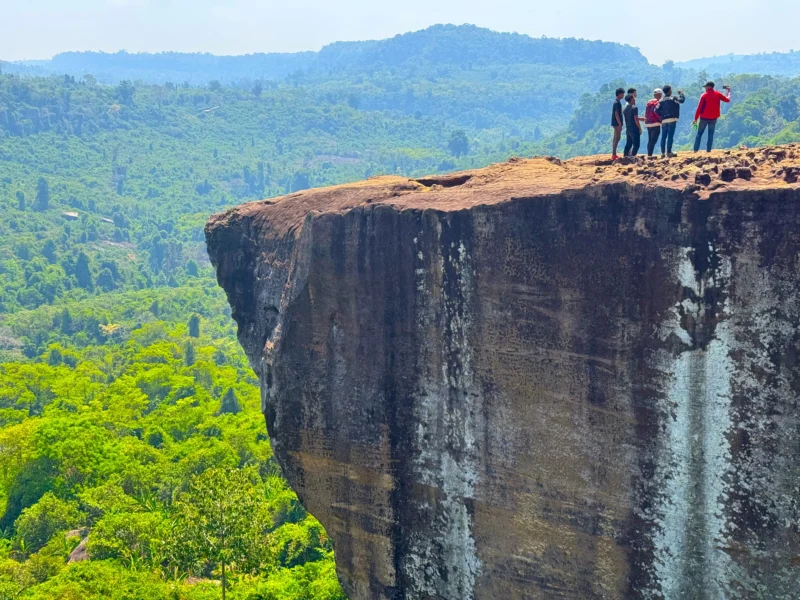
2-Kulen Mountain National Park Tour when you arrived the ticket checkpoint, we recommend you should go to the restroom and then you keep going to see the mountain cliff and the cliffs of Kulen Mountain National Park rise dramatically above the surrounding forests, forming a powerful natural fortress that once held deep spiritual and historical meaning for the Khmer kings.
Kulen Mountain National Park Tour: Discover Hidden the Sacred Mountain& Kampong Plouk Floating Village and These ancient sandstone cliffs are believed to be part of the sacred landscape where King Jayavarman II declared independence in the 9th century, marking the beginning of the Khmer Empire. Standing on the edge of these cliffs, visitors are greeted with sweeping views of endless green jungle, rolling hills, and distant plains that seem to stretch forever.
Kulen Mountain National Park Tour: Discover Hidden the Sacred Mountain& Kampong Plouk Floating Village,The air is cool and filled with the sound of wind passing through trees, creating a peaceful yet majestic atmosphere. Local legends say the cliffs were chosen by the king because of their divine energy and protective spirit. Today, they remain a symbol of strength, mystery, and natural beauty. At sunrise and sunset, the cliffs glow in golden light, making the scenery even more breathtaking and unforgettable for every traveler.
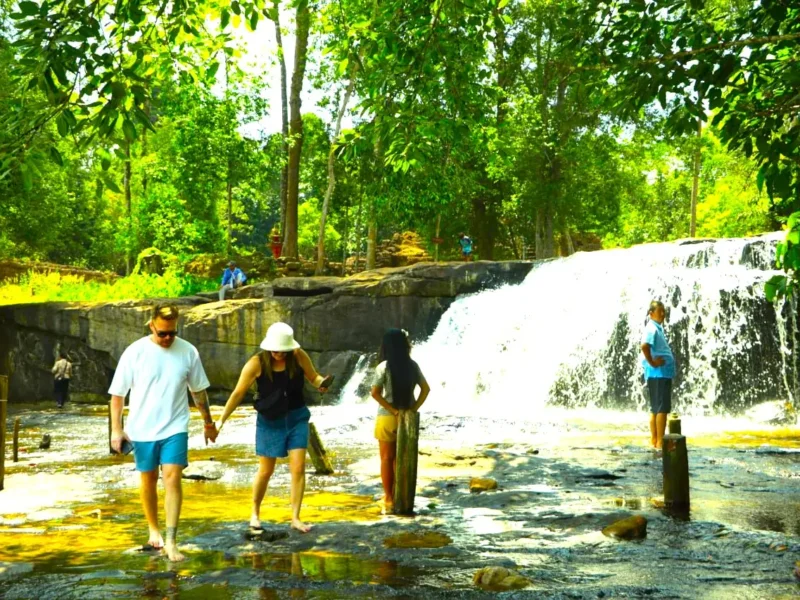
Kulen Mountain National Park is often described as the birthplace of the Khmer Empire. Located in Siem Reap Province, it rises above the plains like a green giant covered in dense jungle, sacred streams, and ancient ruins. For Cambodians, this mountain is not just a natural attraction and it is a holy place where history, religion, and nature come together.
Discover Hidden the Sacred Mountain& Kampong Plouk Floating Village and More than 1,200 years ago, King Jayavarman II, the founder of the Khmer Empire, declared independence from Java on this very mountain. This moment marked the beginning of one of Southeast Asia’s most powerful civilizations. That is why Kulen is often called the King’s Mountain or Mountain of the Great King.
The Mountain Landscape and Sacred Atmosphere
Discover Hidden the Sacred Mountain& Kampong Plouk Floating Village, the journey up Kulen Mountain is itself an experience. The road winds through thick forest, where tall trees form a green tunnel and the air becomes cooler as you ascend. Birds sing, monkeys sometimes appear along the roadside, and small local stalls sell fresh coconuts, fruits, and handmade souvenirs.
Discover Hidden the Sacred Mountain& Kampong Plouk Floating Village,at the top, the environment changes completely. Instead of heat and dust, there is freshness, mist, and the sound of flowing water. The mountain plateau is dotted with pagodas, statues, and sacred sites that reflect centuries of devotion. This peaceful environment is one reason why Kulen is not just a tourist attraction, but also a spiritual retreat.
The River of a Thousand Lingas
2-Kulen Mountain National Park Tour: Discover Hidden the Sacred Mountain& Kampong Plouk Floating Village and One of the most extraordinary attractions is the “River of a Thousand Lingas,” carved into the bed of a shallow river flowing through the jungle. Known locally as Kbal Spean, this sacred site features thousands of small stone carvings known as lingas is symbols of divine energy in Hindu tradition.
2-Kulen Mountain National Park Tour: Discover Hidden the Sacred Mountain& Kampong Plouk Floating Village and The riverbed is covered with these ancient carvings, along with images of gods, lotus flowers, and sacred symbols. As water flows over them, it is believed to be blessed before continuing downstream to the rice fields of Cambodia. Walking along this river feels like stepping into a hidden spiritual world. The sound of water, the moss-covered stones, and the mysterious carvings create a deeply atmospheric experience. It is not just a historical site and it feels alive with ancient energy.
The Majestic Kulen Waterfall
2-Kulen Mountain National Park Tour: Discover Hidden the Sacred Mountain& Kampong Plouk Floating Village and Another highlight of Kulen Mountain National Park is its stunning waterfall, one of the most popular natural attractions in Cambodia. The waterfall is wide, powerful, and surrounded by lush greenery. Water cascades down rocky cliffs into cool natural pools where visitors can swim and relax.Local families often visit the waterfall during weekends and holidays, turning it into a joyful gathering place.
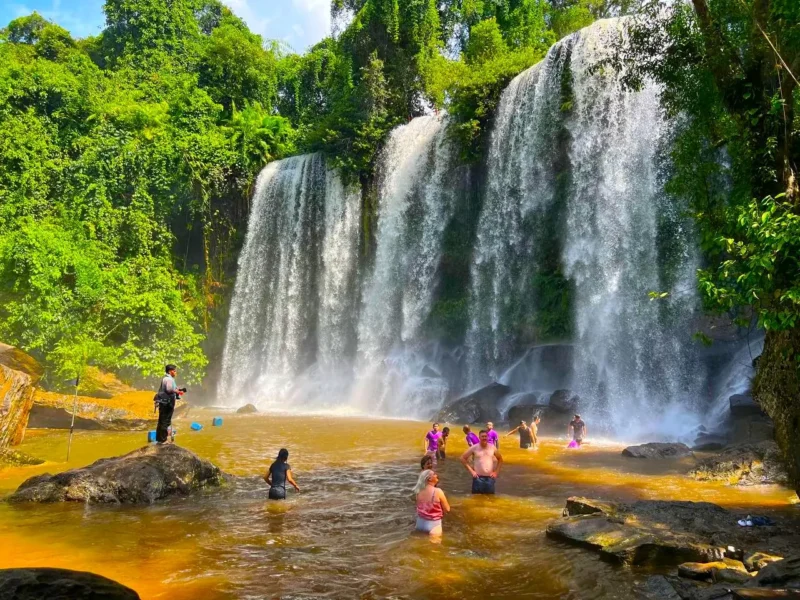
2-Kulen Mountain National Park Tour: Discover Hidden the Sacred Mountain& Kampong Plouk Floating Village and Children play in the water, monks sometimes bathe nearby, and travelers enjoy the refreshing atmosphere after exploring the mountain.The waterfall is especially beautiful during the rainy season when the water flow is strong and the surrounding jungle becomes vibrant green. It is a perfect place for photography, meditation, or simply cooling off in nature.
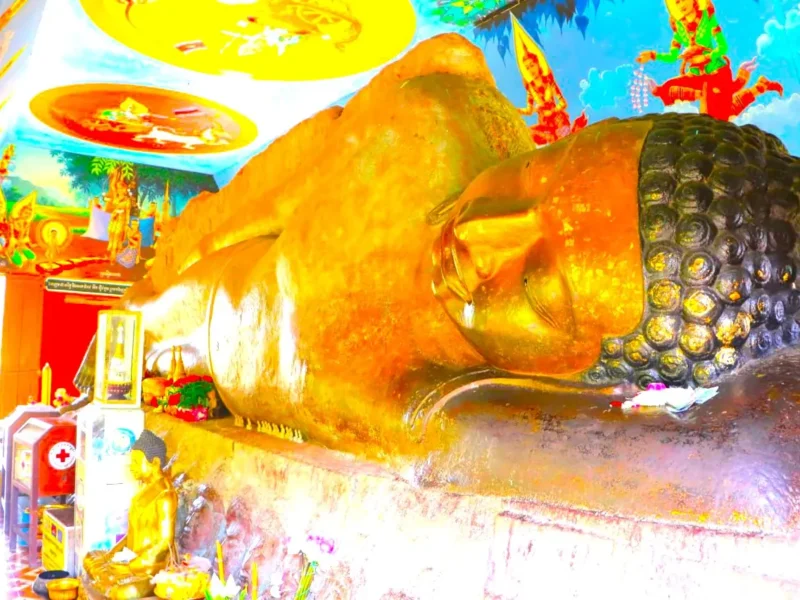
The Reclining Buddha of Kulen Mountain
On the mountain, you will also find one of Cambodia’s most important religious monuments the giant Reclining Buddha carved directly into a sandstone rock formation. This statue is believed to date back to the 16th century and is considered sacred by Buddhists across the country.The Buddha lies peacefully on his side, representing enlightenment and the transition into nirvana. Pilgrims climb the steps to reach the statue, where they offer incense, flowers, and prayers. From this viewpoint, visitors can also enjoy panoramic views of the surrounding forest and plains below. It is a place of calm reflection, where spirituality and nature merge into one experience.
The Ancient Capital and the Rise of Kings
2-Kulen Mountain National Park Tour: Discover Hidden the Sacred Mountain& Kampong Plouk Floating Village and The history of Kulen Mountain is deeply connected to Cambodia’s ancient capitals and the rise of the Khmer Empire. Before the grand temples of Angkor were built, early kings established sacred cities in this region.The most famous later capital, Angkor, became the heart of the empire for centuries, with monumental temples such as Angkor Wat reflecting the power and sophistication of Khmer civilization.
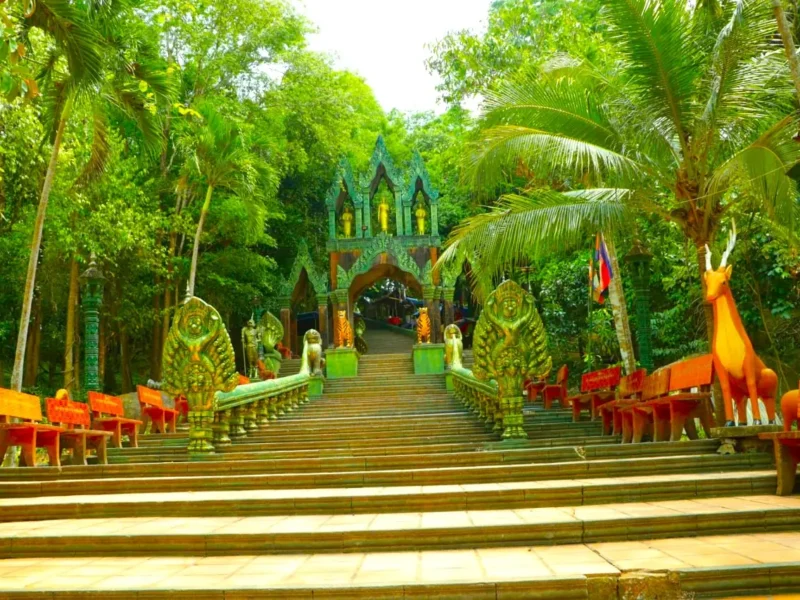
2-Kulen Mountain National Park Tour: Discover Hidden the Sacred Mountain& Kampong Plouk Floating Village and However, Kulen Mountain represents the beginning—the sacred origin point where kings declared independence and divine authority. It is where political power was first linked with spiritual legitimacy, shaping Cambodia’s identity for generations. When you stand on the mountain, it is easy to imagine ancient ceremonies, royal processions, and monks blessing kings who once ruled over a vast empire.
2-Kulen Mountain National Park Tour: Discover Hidden the Sacred Mountain& Kampong Plouk Floating Villag
From the sacred mountains, the journey continues toward the water world of Kampong Phluk Floating Village, located near the famous Tonlé Sap Lake. This is one of Cambodia’s most remarkable living communities, where entire villages rise and fall with the rhythm of the water.Unlike traditional land villages, everything here is adapted to the lake’s seasonal changes houses, schools, markets, and even temples float or stand on tall stilts.

Floating Houses and Daily Life
The floating houses of Kampong Phluk are colorful, simple, and beautifully adapted to the environment. Some are built on wooden stilts that rise dramatically above the water during the dry season, while others float directly on rafts.
Families live in close connection with the water. Boats replace bicycles and cars. Children row themselves to school, fishermen cast nets from their doorsteps, and daily life flows with the rhythm of the lake. During the rainy season, when water levels rise, the entire village transforms into a floating landscape. Homes appear to drift between flooded trees, creating a surreal and magical atmosphere.
Schools and Community Life
One of the most inspiring aspects of Kampong Phluk Floating Village is its floating school system. Children attend classes in simple wooden classrooms built above water. Boats bring them to school every morning, and education continues despite the challenges of a changing environment. The community is tightly connected. Neighbors depend on each other for fishing, trade, and transportation. Life is simple but deeply resilient. Despite limited resources, there is a strong sense of unity and cooperation.

Fishing Culture and Local Economy
Fishing is the heart of life in Kampong Phluk. The waters of Tonlé Sap Lake are rich with fish, providing food and income for thousands of families. Fishermen use traditional nets, traps, and small boats to catch fish that are sold in nearby markets. Fish drying on wooden racks is a common sight, filling the air with a strong, salty aroma. This fish is then traded or preserved, forming an essential part of Cambodia’s diet and economy. The rhythm of fishing follows the seasons. During high water, fishing expands deeper into flooded forests. During low water, villagers focus on maintenance, repairs, and preparation for the next cycle.
Floating Restaurants and Tourism Experience
In recent years, floating restaurants have become popular attractions for visitors. These restaurants offer fresh fish, grilled dishes, coconut drinks, and traditional Cambodian meals all served while floating gently on the water. Sitting in a floating restaurant gives a unique feeling of peace. You can watch boats pass by, children rowing home from school, and fishermen returning with their daily catch.Tourism has become an important part of the local economy, helping support families while also sharing the beauty of this lifestyle with the world.
Crocodile Farms and Unique Local Attractions
Another surprising feature near Kampong Phluk is the presence of crocodile farms. These farms raise crocodiles in controlled environments, mainly for conservation, tourism, and regulated trade. Visitors can observe these powerful reptiles from safe platforms. It is an unusual but fascinating experience that adds another layer to the region’s diversity. Alongside crocodile farms, visitors can also explore small workshops, handicraft stalls, and local markets that reflect the creativity of the community.

Sunset Over the Floating Village
2-Kulen Mountain National Park Tour: Discover Hidden the Sacred Mountain& Kampong Plouk Floating Village, Perhaps the most unforgettable moment in Kampong Phluk Floating Village is sunset. As the sun begins to lower, the entire lake transforms into a canvas of gold, orange, and deep purple. The water reflects the sky like a mirror, and the silhouettes of stilt houses and boats create a dreamlike scene. Fishermen return home slowly, birds fly across the horizon, and the air becomes still and warm. It is a moment of perfect harmony between humans and nature.
2-Kulen Mountain National Park Tour: Discover Hidden the Sacred Mountain& Kampong Plouk Floating Village and Many visitors describe this sunset as one of the most peaceful experiences in Cambodia. And you finished visiting Kampong Plurk floating village tour guide and driver will pick you up to the hotel and finished your tour. And on the way back to the hotel you can enjoy your time the beautiful of rice field , local village. Especially, you can see very different life style of the people who live in the floating village and people who live in the city.
An Unforgettable Cambodian Experience
2-Kulen Mountain National Park Tour: Discover Hidden the Sacred Mountain& Kampong Plouk Floating Village and Kampong Phluk Floating Village is far more than a tourist attraction—it is a living community that demonstrates the extraordinary relationship between people and water. From the towering stilt houses and colorful boats to the floating restaurants, fishing traditions, local schools, and spectacular lake views, every aspect of the village tells a story of resilience, culture, and adaptation.
2-Kulen Mountain National Park Tour: Discover Hidden the Sacred Mountain& Kampong Plouk Floating Village and Visitors leave Kampong Phluk with a deeper appreciation for Cambodia’s rich heritage and the remarkable lifestyles of the communities that thrive on Tonlé Sap Lake. Whether you are captivated by rural landscapes, fascinated by local culture, or simply seeking a unique travel experience, Kampong Phluk offers an unforgettable journey into one of Cambodia’s most extraordinary destinations.
2-Kulen Mountain National Park Tour: Discover Hidden the Sacred Mountain& Kampong Plouk Floating Village and Hidden along the shores of the magnificent Tonlé Sap Lake, Kampong Phluk Floating Village offers one of the most fascinating and authentic cultural experiences in Cambodia. Located just a short drive from Siem Reap.
This remarkable village invites visitors to explore a unique way of life where homes, schools, restaurants, and daily activities are deeply connected to the water. Surrounded by breathtaking rice fields, towering stilt houses, traditional fishing boats, and endless lake views, Kampong Phluk is a destination that showcases the beauty, resilience, and traditions of local Cambodian communities.
(Sunrise at the early morning) or Without sunrise, starting time at 7:00 am
Kulen Mountain, revered as the birthplace of the Khmer Empire, holds immense historical and spiritual significance. In the 9th century, King Jayavarman II proclaimed himself “Devaraja” here, marking the foundation of Angkor and showcasing his visionary leadership. Stretching about 30 kilometers in length and rising over 487 meters high, the mountain once supported thriving populations of priests, monks, and villagers who sustained both religious and educational life.
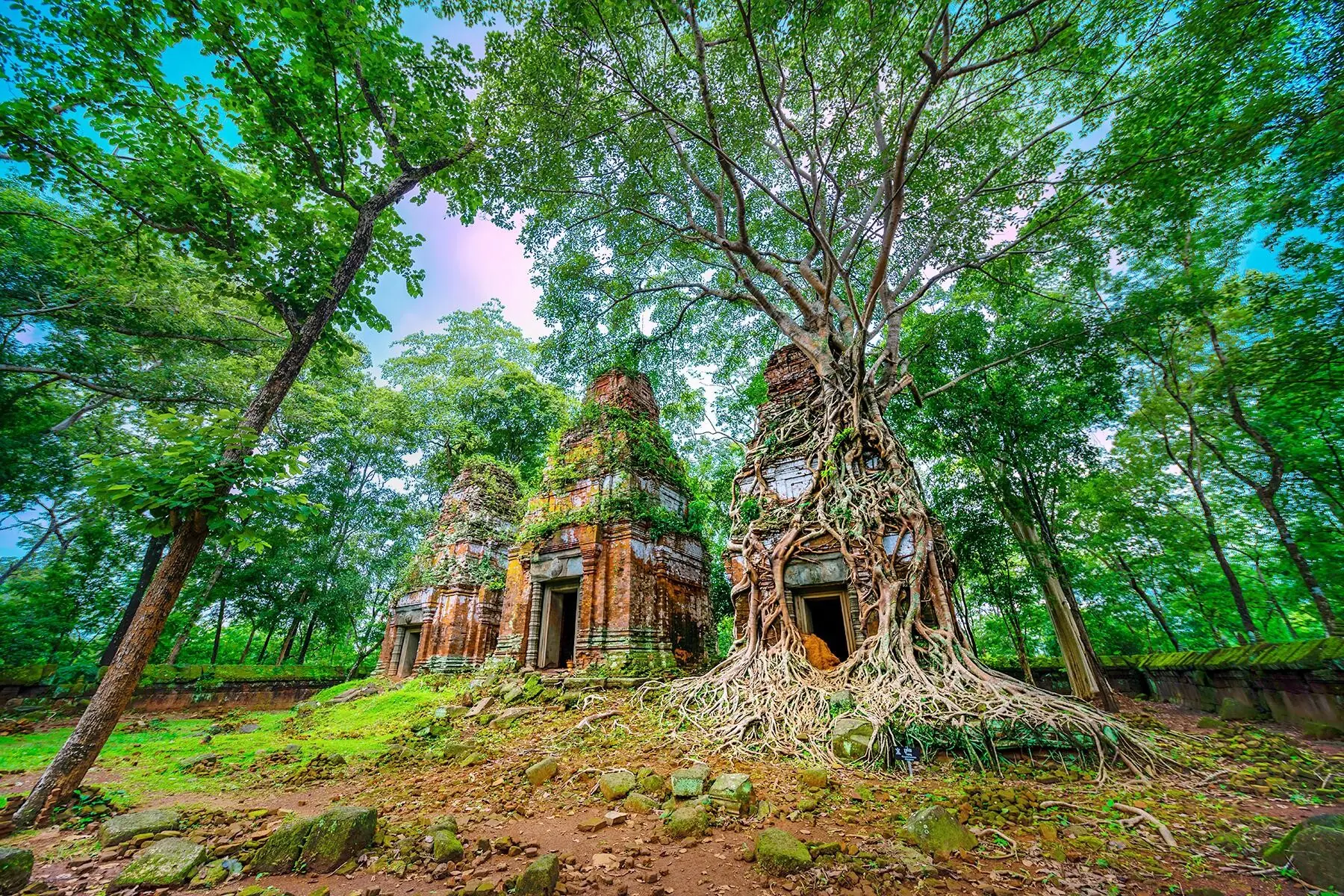
Ancient temples and carvings, including the famous riverbed lingas, reflect Khmer architectural mastery and devotion to Hinduism and Buddhism, later embraced by successive kings. The rainforest surrounding Kulen shelters giant trees entwined with forgotten shrines, evoking the mystery of temples hidden in the jungle. Anthropologically, the site reveals how spirituality, governance, and community intertwined in Khmer culture. Today, Kulen’s sacred aura is enriched by its fresh waterfalls, pristine rivers, and lush rainforest, making it both a holy sanctuary and a natural treasure for Cambodia.
Kulen Mountain, one of Cambodia’s most sacred sites, is renowned for its Reclining Buddha, a magnificent symbol of Buddhist faith and serenity. Carved directly into the sandstone cliffs, the statue reflects devotion, artistry, and the spiritual heritage of the Khmer people. Pilgrims from across the country journey to the mountain to pay homage, meditate, and participate in religious rituals, making it both a spiritual and cultural center. Surrounded by lush rainforest, cascading waterfalls, and ancient temples, the Reclining Buddha of Kulen Mountain connects nature, history, and religion, offering visitors a profound sense of peace, reflection, and timeless Khmer devotion.
Kulen Mountain, a sacred landmark in Cambodia, is celebrated for its ancient Hindu heritage, including the remarkable riverbed carvings of Shiva Lingas and representations of Lord Vishnu and Prajapati. The mountain is famously home to the “1000 Lingas,” intricately carved into sandstone, symbolizing devotion, protection, and spiritual power. These sacred sites reflect the Khmer Empire’s deep religious and cultural roots, attracting pilgrims and scholars alike. Surrounded by pristine waterfalls and lush rainforest, Kulen Mountain combines natural beauty with spiritual significance. The Lingas, along with temples and shrines, embody the intertwining of religion, art, and anthropology, preserving the timeless legacy of Hindu devotion in Cambodia.
Kampong Plouk Floating Village, nestled on the banks of Tonlé Sap Lake in Cambodia, is a living testament to human resilience, adaptability, and the ability to create harmony with nature. Unlike conventional settlements on land, the village is characterized by its striking stilt houses, which tower dramatically above the ground, some elevated as high as six to ten meters. These wooden structures are ingeniously designed to withstand the seasonal rhythms of the lake, where waters rise and fall dramatically throughout the year. During the dry season, the stilt houses appear like giant wooden legs rooted firmly into the earth, while in the rainy season, they seem to float majestically on the lake, their stilts hidden beneath the water. This architectural feature not only protects families from floods but also reflects the ingenuity of generations who have learned to build with the challenges of their environment in mind.

Complementing the stilted homes is a network of floating infrastructure that supports daily life on water. Floating schools, health centers, restaurants, and even temples drift on the lake, ensuring that the community continues to function seamlessly regardless of water levels. These floating facilities are essential to the rhythm of the village, where boats serve as the primary means of transport and where wooden walkways connect neighbors during low water seasons. The design of this infrastructure demonstrates a perfect blend of practicality and tradition, as it allows villagers to maintain their culture while adapting to the lake’s shifting moods.
Life in Kampong Plouk is uniquely tied to the water, shaping every aspect of daily living. Boats replace bicycles and motorbikes, children learn to row at an early age, and fishing remains not only the primary livelihood but also a cultural identity. Families spend their mornings casting nets or setting traps, afternoons drying or preparing fish for market, and evenings gathered around meals made from the day’s catch. The lake provides everything: food, income, and a natural highway for transportation. Even education takes place on the water, with children paddling to floating schools, their classrooms gently swaying as lessons unfold. The water is not seen as a barrier but as a companion to life, shaping traditions, values, and a strong sense of community among villagers.
Encircling Kampong Plouk is a vast and enchanting mangrove forest, which plays a crucial role in the village’s survival. These mangroves, with their dense roots plunging into the water, act as a protective barrier against erosion, storms, and strong currents. Beyond their ecological function, they provide a habitat for a wide array of wildlife—birds, fish, and amphibians—that enrich the biodiversity of Tonlé Sap Lake. Villagers often guide visitors on boat rides through the shaded mangrove channels, offering a tranquil glimpse of life intertwined with nature. The forest is not only an environmental safeguard but also an educational classroom for children, teaching them the importance of preservation and sustainable living.
The environment of Kampong Plouk is nothing short of dynamic, shifting dramatically with the seasons. During the dry months, the water recedes, exposing the stilts of the houses and transforming the village into a tall forest of wooden legs above cracked earth. In contrast, the rainy season floods the landscape, transforming homes into floating islands and turning the mangroves into a waterworld of green. This cyclical rhythm creates challenges but also instills resilience in the community. Villagers have adapted their lives and livelihoods to these seasonal changes, developing a deep respect for nature’s cycles.
The population of Kampong Plouk, estimated at around 3,000 residents, is a tight-knit community bound by shared experiences and traditions. Families are extended, with multiple generations often living under one roof, passing down knowledge of fishing, boat-building, and stilt-house construction. Though the community is small, it is vibrant and strong, reflecting the ability of people to thrive in environments that might seem inhospitable to outsiders.
Education, while once limited, has become an increasing priority in Kampong Plouk. Floating schools now provide children with access to formal learning, ensuring that the younger generation is not left behind despite the challenges of geography. Subjects range from basic literacy and mathematics to environmental studies, teaching students not only how to read and write but also how to live sustainably with their surroundings. Teachers often travel from nearby towns, and lessons are adjusted to accommodate the realities of life on the water. Education is seen as a bridge to the future, offering children opportunities beyond traditional fishing while also instilling in them a sense of pride in their heritage.

Still, fishery skills remain at the heart of Kampong Plouk’s identity. Generations of villagers have mastered the techniques of net casting, trap building, and fish preservation. These skills are vital, not only as a means of livelihood but also as cultural knowledge passed from elders to children. The Tonlé Sap Lake is famous for its abundance, supplying much of Cambodia’s freshwater fish. For Kampong Plouk, fishing is more than an economic activity—it is a way of life that binds the community together, shapes their festivals, and defines their relationship with the lake. The resilience of these fishery traditions has sustained the community for centuries and continues to be a cornerstone of survival today.
Looking ahead, future development in Kampong Plouk focuses on balancing modernization with sustainability. Eco-tourism has emerged as an important economic opportunity, drawing visitors eager to experience the village’s unique lifestyle, explore the mangroves, and witness the harmony between people and water. Income from tourism provides families with new resources to improve education, healthcare, and infrastructure. At the same time, there is a conscious effort to protect the fragile ecosystem of Tonlé Sap Lake from overfishing, deforestation, and pollution. Development plans emphasize strengthening infrastructure, improving waste management, expanding access to education, and promoting renewable energy solutions such as solar power. The ultimate goal is to ensure that Kampong Plouk continues to thrive while preserving its cultural identity and natural environment for generations to come.
In essence, Kampong Plouk Floating Village is far more than just a tourist destination—it is a living, breathing community that demonstrates how humans can adapt gracefully to the forces of nature. From its towering stilt houses and floating infrastructure to its vibrant daily life on water, lush mangrove forests, and enduring fishery traditions, the village represents resilience at its finest. Its people, though small in number, embody strength, adaptability, and a vision for a sustainable future. Kampong Plouk is not only a window into Cambodia’s cultural heritage but also a reminder of the deep connection between humans and the environment, where life and water flow together in perfect harmony.
Kulen Mountain National Park Tour: Hidden the Sacred Mountain& Kampong Plouk Floating Village Kulen Mountain National Park Tour:...
1.Best itinerary one day tour: over Beng Mealea & Korker Temples Best itinerary one day tour: over Beng...

Angkor Wat & ATV(Quad Bike) Tour: Discover Sunrise of Siem Reap with Unforgettable Quad Bike Adventure 2.Angkor Wat...

1-Ultimate Full Day Tour Itinerary: Discover sunrise Over Angkor, Bayon and Ta Prom temples 1-Ultimate Full Day Tour...

One day Itinerary: Discover Sunrise Angkor Wat ,Ta prom and Floating village Ultimate Angkor Adventure Itinerary: Discover Sunrise...

Discover the Wonders Itinerary of Siem Reap: 7.Kulen Mountain National Park, Sunrise at Angkor Wat, Angkor Thom, Ta...