Kulen Mountain National Park Tour: Hidden the Sacred Mountain& Kampong Plouk Floating Village Kulen Mountain National Park Tour:...

1-Ultimate Full Day Tour Itinerary: Discover sunrise Over Angkor,Bayon and Ta Prom temples,The early morning, tour guide will go to pick you pick from the hotel to buy temple ticket and you have to leave from the hotel at 4:30am to by ticket the you move to sunrise at Angkor Wat temple. before you leave from the hotel, please wear a long clothe, knees or under knees and cover your shoulders. You have wear comfortable shoes and we recommend you to ask the hotel to prepare your breakfast box and take a way.
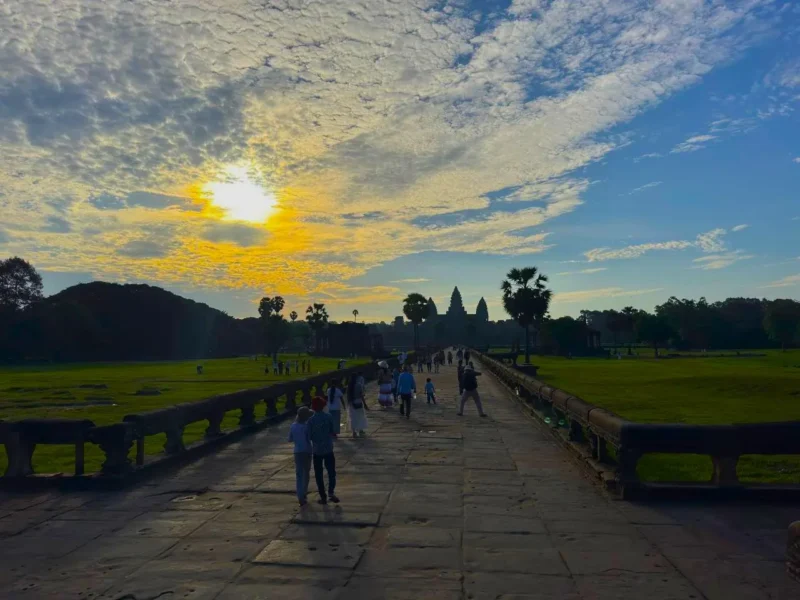
1-Ultimate Full Day Tour Itinerary: Discover sunrise Over Angkor,Bayon and Ta Prom temples and First, your unforgettable journey through the ancient wonders of Cambodia with an early morning departure to witness the spectacular sunrise at Angkor Wat, the world’s largest religious monument and the crown jewel of the Khmer Empire.
1-Ultimate Full Day Tour Itinerary: Discover sunrise Over Angkor,Bayon and Ta Prom temples, As the first rays of sunlight illuminate the iconic lotus-shaped towers, the temple reflects beautifully across the surrounding lotus ponds, creating one of the most breathtaking sights in Southeast Asia. This magical experience offers exceptional opportunities for photography and provides a peaceful introduction to the rich history of Angkor.
1-Ultimate Full Day Tour Itinerary: Discover sunrise Over Angkor,Bayon and Ta Prom temples, Angkor Wat is the most famous temple in Cambodia and one of the greatest architectural masterpieces ever built. Located in the ancient city of Angkor near Siem Reap, this magnificent temple attracts millions of visitors each year with its grand towers, intricate carvings, and rich history. Surrounded by a vast moat and set amidst lush tropical landscapes, Angkor Wat stands as a symbol of Cambodia’s cultural pride and the remarkable achievements of the ancient Khmer civilization.
1-Ultimate Full Day Tour Itinerary: Discover sunrise Over Angkor,Bayon and Ta Prom temples,The temple was commissioned by the powerful Khmer king Suryavarman II during the early 12th century. Construction began around 1113 CE and continued for several decades. Originally dedicated to the Hindu god Vishnu, Angkor Wat later became an important Buddhist temple and remains an active place of worship today. King Suryavarman II envisioned a monument that would demonstrate the strength, wealth, and spiritual devotion of his empire, and the result was one of the most extraordinary religious structures in human history.
1-Ultimate Full Day Tour Itinerary: Discover sunrise Over Angkor,Bayon and Ta Prom temples and One of the most captivating features of Angkor Wat is its stunning stone carvings. The temple walls are covered with kilometers of intricate bas-reliefs that tell stories from Hindu epics such as the Ramayana and Mahabharata. These carvings depict gods, warriors, celestial beings, royal processions, and scenes from daily life. Every detail showcases the incredible skill of Khmer artisans, whose craftsmanship continues to amaze visitors more than 900 years later. The famous carvings of graceful apsaras, or heavenly dancers, are among the temple’s most treasured artistic achievements.
1-Ultimate Full Day Tour Itinerary: Discover sunrise Over Angkor,Bayon and Ta Prom temples and the beauty of Angkor Wat is enhanced by the natural environment that surrounds it. Tall palm trees and ancient tropical trees frame the temple’s majestic silhouette, creating breathtaking views, especially during sunrise. The reflection of the temple towers in the surrounding water creates a magical scene that has become one of the most iconic images in Southeast Asia. Nature and architecture blend harmoniously, giving visitors a sense of peace and wonder.
1-Ultimate Full Day Tour Itinerary: Discover sunrise Over Angkor,Bayon and Ta Prom temples, Gold played an important role in the temple’s history. Historians believe that many statues, decorations, and sacred objects within Angkor Wat were once covered with gold or adorned with golden ornaments. The shining metal symbolized divine power, purity, and prosperity. During ceremonies and religious festivals, the temple would have glowed with splendor, reflecting the wealth and prestige of the Khmer Empire.
1-Ultimate Full Day Tour Itinerary: Discover sunrise Over Angkor,Bayon and Ta Prom temples,Silk was another valuable treasure associated with the royal court and temple ceremonies. Fine silk fabrics were used for religious offerings, royal clothing, banners, and decorations. Skilled Khmer weavers produced beautiful silk textiles featuring elegant patterns and vibrant colors. During important celebrations, monks, dancers, and royal attendants would wear exquisite silk garments, adding beauty and dignity to sacred rituals
1-Ultimate Full Day Tour Itinerary: Discover sunrise Over Angkor,Bayon and Ta Prom temples,After sunrise, continue exploring the magnificent Angkor Wat Temple. Built during the reign of King Suryavarman II in the early 12th century, this architectural masterpiece was originally dedicated to the Hindu god Vishnu before becoming a Buddhist temple.
1-Ultimate Full Day Tour Itinerary: Marvel at the intricate bas-reliefs stretching along the galleries, depicting scenes from Hindu mythology, ancient battles, and the daily life of the Khmer civilization. Walk through the impressive corridors, climb to the upper terraces, and admire the remarkable craftsmanship that has stood the test of time for more than 900 years. And after you finished sunrise at Angkor Wat temple and then you move to local restaurant for breakfast and after that you keep going to visit sought gate of Angkor Thom.
1-Ultimate Full Day Tour Itinerary: Discover sunrise Over Angkor,Bayon and Ta Prom temples, Angkor Thom, meaning “Great City,” is one of the most magnificent ancient capitals of the Khmer Empire in Cambodia. Built in the late 12th century by King Jayavarman VII, this vast walled city covers approximately 9 square kilometers and is surrounded by an impressive moat and strong laterite walls. The city is famous for its grand South Gate, guarded by rows of giant stone statues depicting 54 gods (Devas) and 54 demons (Asuras) pulling the sacred Naga serpent, symbolizing the legendary Churning of the Ocean of Milk.

1-Ultimate Full Day Tour Itinerary: At the heart of Angkor Thom stands the remarkable Bayon Temple, renowned for its serene stone faces carved on towering structures. Throughout the city, visitors can admire countless statues, intricate carvings, and architectural masterpieces that reflect the artistic and spiritual achievements of the Khmer civilization. Today, Angkor Thom remains a breathtaking historical treasure, attracting travelers from around the world with its beauty, mystery, and rich cultural heritage
1-Ultimate Full Day Tour Itinerary: Discover sunrise Over Angkor, Bayon and Ta Prom temples, Bayon Temple is one of the most fascinating and iconic monuments in the Angkor Archaeological Park. Located at the center of Angkor Thom, the temple was built in the late 12th and early 13th centuries by King Jayavarman VII, one of the greatest kings of the Khmer Empire. Dedicated to Mahayana Buddhism, Bayon reflects the king’s vision of compassion, wisdom, and prosperity.
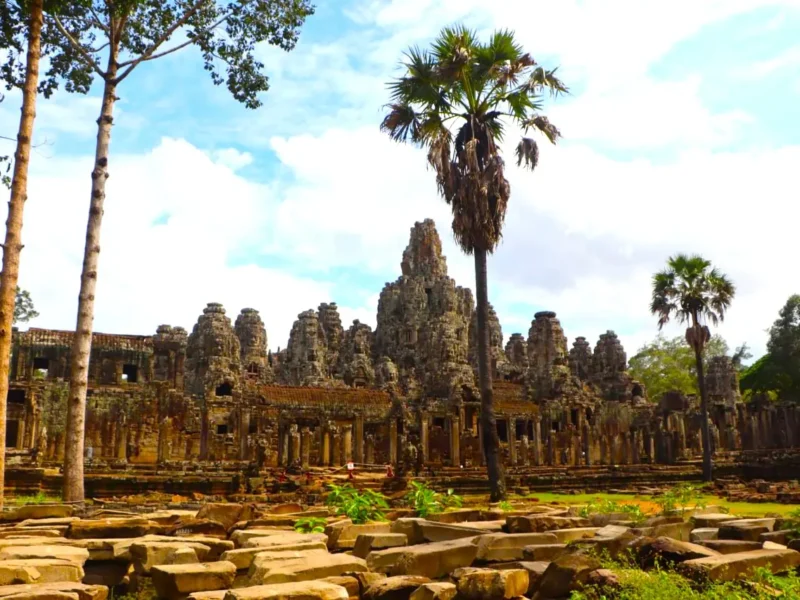
Ultimate Full Day Tour Itinerary: The temple is best known for its magnificent stone towers decorated with giant smiling faces. Originally, Bayon featured 54 towers, symbolizing the provinces of the Khmer Empire. Today, 37 towers remain standing, displaying more than 200 serene and mysterious faces carved into stone. These faces are believed to represent either the Bodhisattva Avalokiteshvara, the embodiment of compassion, or King Jayavarman VII himself.
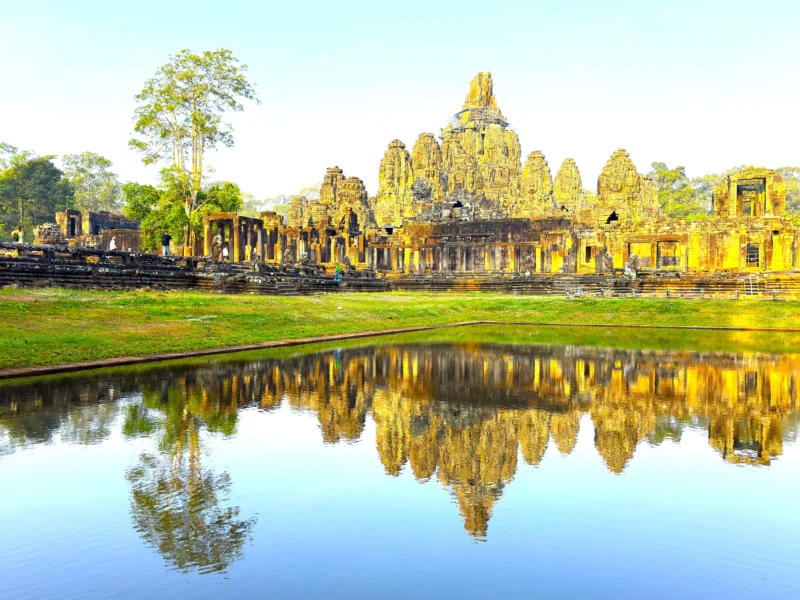
1-Ultimate Full Day Tour Itinerary: Discover sunrise Over Angkor,Bayon and Ta Prom temples Beyond its famous faces, Bayon temple is admired for its intricate bas-reliefs that depict scenes of daily life, religious ceremonies, battles, and historical events. The detailed carvings provide a remarkable glimpse into Khmer society more than 800 years ago. With its towering faces, rich history, and extraordinary artistry, Bayon Temple remains one of Cambodia’s most treasured landmarks and a symbol of the grandeur of the ancient Khmer civilization.
Ultimate Full Day Tour Itinerary: Continue exploring other important monuments within Angkor Thom, including Baphuon Temple, once one of the largest temples in the Angkor region, the Terrace of the Elephants, where kings observed ceremonies and military parades, and the Terrace of the Leper King, decorated with exquisite carvings showcasing the artistic excellence of the Khmer Empire.
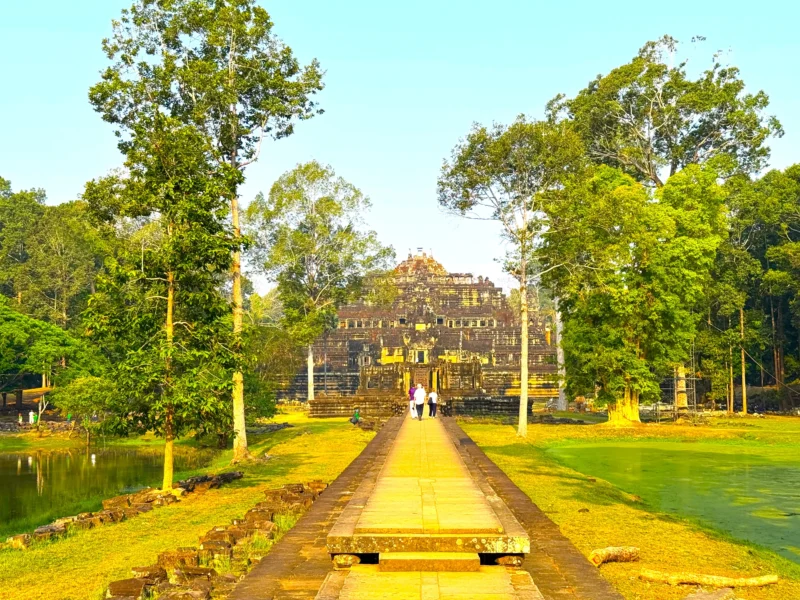
1-Ultimate Full Day Tour Itinerary: Discover sunrise Over Angkor, Bayon and Ta Prom temples Temple is one of the most impressive architectural masterpieces of the ancient Khmer Empire. Located within Angkor Thom, the temple was built in the mid-11th century during the reign of King Udayadityavarman II, around 1060 AD. Dedicated to the Hindu god Shiva, Baphuon was once considered one of the grandest temples in Cambodia and a symbol of royal power and religious devotion.
Constructed as a magnificent temple-mountain, Baphuon rises in three levels and originally featured a central tower that soared approximately 50 meters above the ground, making it one of the tallest structures of its time. The temple’s elevated terraces offer breathtaking views of the surrounding landscape and showcase the engineering brilliance of Khmer builders.
1-Ultimate Full Day Tour Itinerary: Discover sunrise Over Angkor, Bayon and Ta Prom temples, Phimeanakas Temple, meaning “Celestial Palace,” is one of the most intriguing monuments within the ancient royal city of Angkor Thom. Built in the late 10th century during the reign of King Rajendravarman II and later expanded by King Suryavarman I, the temple served as a sacred state temple within the Royal Palace complex.
Constructed in a pyramid style, Phimeanakas rises through three steep tiers, symbolizing Mount Meru, the mythical home of the Hindu gods. At the summit once stood a golden tower that reportedly shone brilliantly in the sunlight, inspiring the temple’s name, “Celestial Palace.” Although the original tower no longer survives, the temple remains an impressive example of early Khmer architecture.
1-Ultimate Full Day Tour Itinerary: Discover sunrise Over Angkor,Bayon and Ta Prom temples,Unlike Bayon Temple, Phimeanakas is not known for giant stone faces. Instead, its beauty lies in its elegant proportions, sandstone carvings, and historical significance. According to an ancient Khmer legend, the king was required to spend each night with a divine serpent spirit who appeared as a woman in the golden tower. The prosperity of the kingdom was believed to depend on this sacred ritual.
The Terrace of the Elephants is one of the most fascinating attractions in the ancient city of Angkor, Cambodia. Built in the late 12th century during the reign of King Jayavarman VII, this magnificent terrace served as a grand platform from which the king watched military parades, royal ceremonies, and public celebrations.
Stretching for about 350 meters, the terrace is famous for its remarkable stone carvings that showcase the artistic excellence of the Khmer Empire. The walls are beautifully decorated with detailed images of elephants, warriors, mythical creatures, and sacred figures. The lifelike elephants, carved in high relief, appear to emerge from the stone, creating a powerful and impressive visual effect.
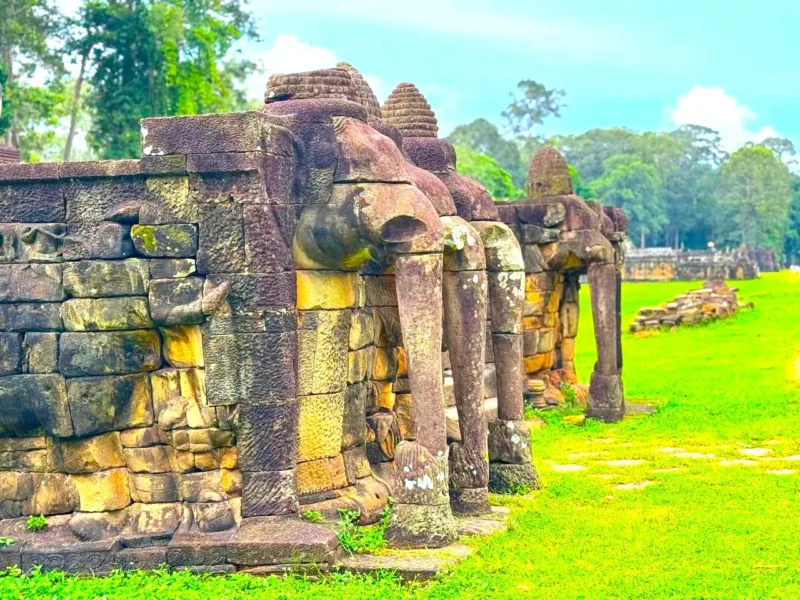
The terrace reflects the strength, prosperity, and cultural achievements of the Khmer Kingdom during its golden age. Each carving tells a story of royal power, religious beliefs, and everyday life, offering visitors a glimpse into Cambodia’s rich history.
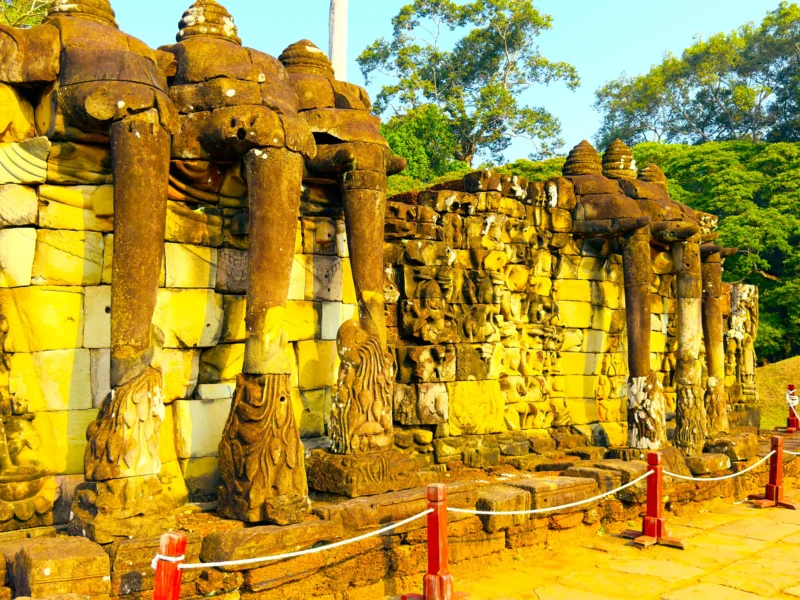
Today, the Terrace of the Elephants remains one of the most visited monuments within the Angkor Archaeological Park. Its elegant design, historical significance, and extraordinary craftsmanship continue to captivate travelers from around the world. Standing before these ancient carvings, visitors can admire the creativity and grandeur of a civilization that flourished more than 800 years ago.
The Terrace of the Leper King is one of the most mysterious and captivating monuments in the ancient city of Angkor, Cambodia. Constructed in the late 12th century during the reign of King Jayavarman VII, this remarkable terrace is believed to have served as a royal cremation site or ceremonial platform. Its intriguing name comes from a statue discovered on the terrace, which was once thought to represent a king suffering from leprosy.
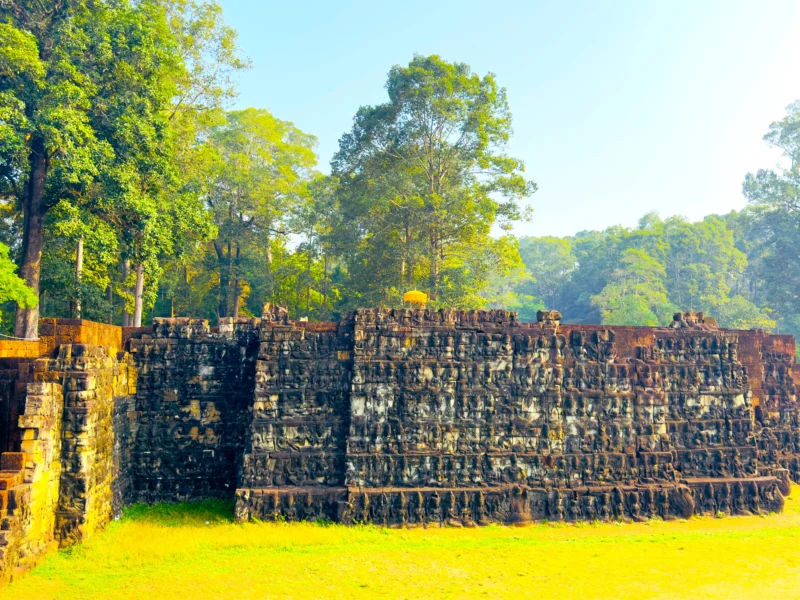
What makes the Terrace of the Leper King truly extraordinary is its breathtaking carvings. The walls are covered with intricate sculptures of gods, goddesses, demons, mythical creatures, and celestial beings. These detailed carvings are arranged in multiple layers, creating a hidden corridor that amazes visitors with its artistic beauty and spiritual symbolism.
The craftsmanship displayed in the stonework reflects the skill and creativity of Khmer artisans during the height of the Khmer Empire. Every carving tells a story of religion, mythology, and royal power, offering valuable insights into the beliefs and culture of ancient Cambodia.
Ta Nei Temple is a hidden gem nestled deep within the forests of Angkor, Cambodia. Built in the late 12th century during the reign of King Jayavarman VII, around 1186–1200 AD, this peaceful Buddhist temple offers visitors a unique opportunity to experience the beauty of Angkor away from the crowds. Dedicated to Mahayana Buddhism, Ta Nei reflects the spiritual devotion and architectural brilliance of the Khmer Empire.
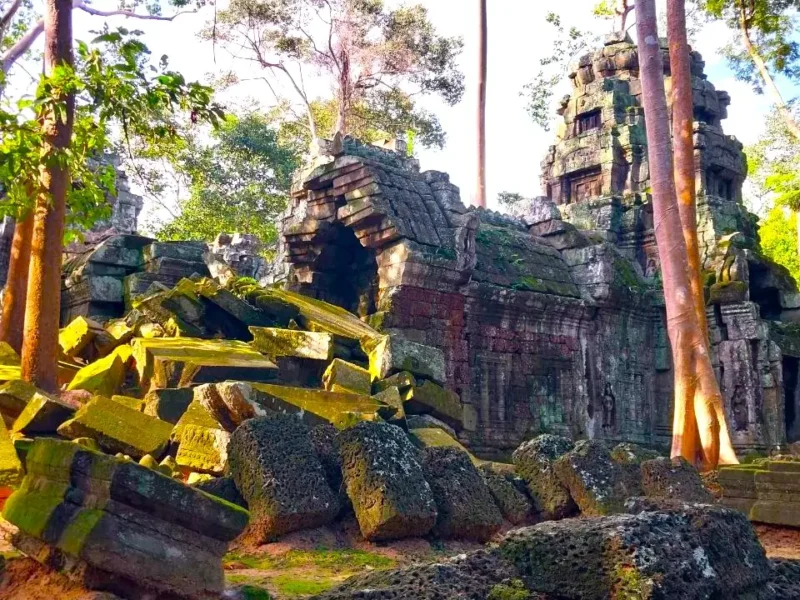
Ta Nei Temple is one of the hidden treasures of the Angkor region, offering visitors a peaceful and authentic experience away from the larger crowds. Built in the late 12th century during the reign of King Jayavarman VII, this small yet charming Buddhist temple reflects the spiritual devotion and architectural brilliance of the Khmer Empire.
Nestled deep within the forest, Ta Nei creates a magical atmosphere where ancient stone structures blend harmoniously with nature. Massive trees and creeping roots surround the temple, giving it a mysterious and timeless beauty. Unlike many restored temples, Ta Nei remains largely untouched, allowing visitors to experience its original character.
The temple is decorated with delicate carvings that showcase the skill of Khmer artisans. Visitors can admire beautifully carved devatas, floral patterns, sacred symbols, and decorative lintels that reveal the artistic excellence of the period. Although less elaborate than larger temples, the carvings possess a unique elegance and historical charm.

Ta Nei was dedicated to Buddhist worship and served as an important religious sanctuary during the height of the Khmer Empire. Today, it remains a fascinating destination for travelers seeking tranquility, history, and culture. Its secluded setting, impressive craftsmanship, and connection to King Jayavarman VII make Ta Nei Temple a captivating gem within the Angkor Archaeological Park.
Ta Prom temple is deep in the heart of the ancient in Cambodia, there is a place where time seems to have paused and nature has slowly taken back what human hands once built. This temple is not only a monument of stone but also a living fusion of history, devotion, artistry, and the unstoppable power of the jungle. Built during the height of the Khmer Empire, Ta Prohm remains one of the most atmospheric and visually striking temples in Cambodia, a place where roots and ruins embrace each other in silence.

Ta Prohm was commissioned in the late 12th century by the powerful Khmer king Jayavarman VII, one of the most remarkable rulers in Southeast Asian history. His reign marked a golden era of construction, spirituality, and cultural development. Unlike many other temples built for kings or gods alone, Ta Prohm was originally established as a Mahayana Buddhist monastery and university. It was dedicated to the king’s mother, whom he honored as the embodiment of wisdom, compassion, and maternal care. The construction began around 1186 CE, during a time when Jayavarman VII was transforming the Khmer capital into a vast sacred city filled with temples, hospitals, and public works.
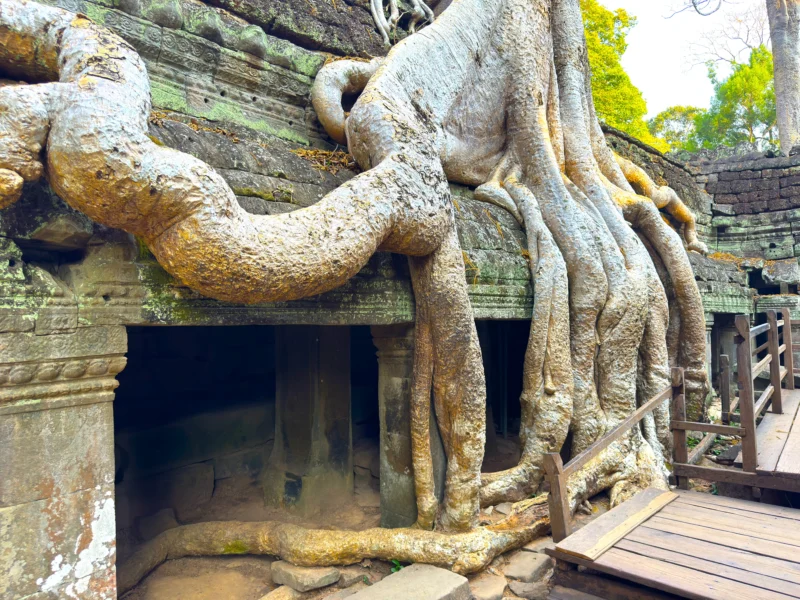
What makes Ta Prohm especially captivating is not only its age but the way it was intentionally left in a semi-ruined state after rediscovery, allowing nature to continue its slow conquest. Towering trees, especially silk-cotton and strangler figs, rise directly from the stone foundations. Their enormous roots twist through doorways, wrap around carved walls, and descend like natural pillars holding the temple in a fragile balance.
These trees are not just decorative elements; they are living forces that have reshaped the architecture over centuries. Their presence creates a surreal harmony where human creation and natural growth are inseparable. Walking through Ta Prohm feels like stepping into a forgotten world.

Massive sandstone blocks lie scattered, while narrow corridors lead into dim sanctuaries where light filters through gaps in collapsed ceilings. The air is thick with humidity, bird calls, and rustling leaves. Unlike fully restored temples such as those in nearby Angkor, Ta Prohm offers a raw, emotional experience—one that reflects both the glory and impermanence of civilization.
The carvings of Ta Prohm are among its most precious artistic treasures. Though many have been weathered by time, what remains reveals extraordinary craftsmanship. Devatas celestial female figures are carved gracefully into the stone, adorned with intricate jewelry, delicate headdresses, and serene expressions.
These carvings symbolize spiritual beauty and divine guardianship. Along the corridors, you can also find bas-reliefs depicting scenes from Buddhist mythology, royal ceremonies, and everyday life in the Khmer Empire. Each carving tells a story, not just of religion but of a society deeply connected to art, devotion, and cosmic order.
Unlike some temples where stone dominates the experience, Ta Prohm is defined equally by its organic transformation. The trees are perhaps its most iconic feature. Giant roots spill over roofs like frozen waterfalls, while trunks rise from collapsed galleries as if the forest itself is rebuilding the temple in its own image.
These trees are believed to be primarily silk-cotton trees (Ceiba pentandra) and strangler figs. Over centuries, their roots have exerted immense pressure on the sandstone blocks, causing some structures to collapse while stabilizing others in unexpected ways. This delicate balance has made Ta Prohm both fragile and mesmerizing.
After you finished Ta Prom temple and you have done 1-Ultimate Full Day Tour Itinerary: Discover sunrise Over Angkor,Bayon and Ta Prom temples and then tour guide and driver will pick you up to your hotel and you can enjoy your free time at the hotel or you can explore in Siem Reap city by your own and we should like to say thank you so much using Angkorian Travels service in Cambodia.
Kulen Mountain National Park Tour: Hidden the Sacred Mountain& Kampong Plouk Floating Village Kulen Mountain National Park Tour:...
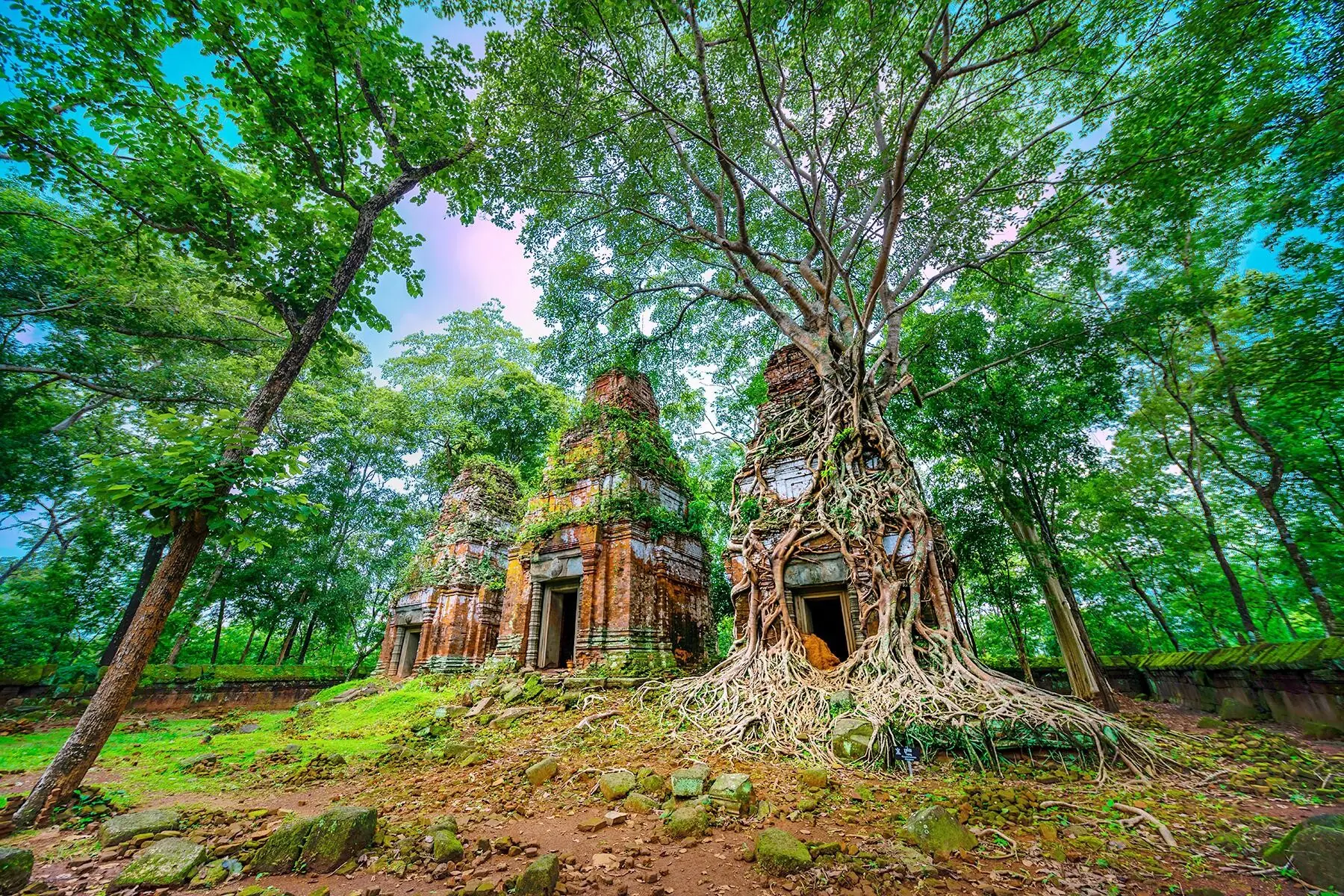
1.Best itinerary one day tour: over Beng Mealea & Korker Temples Best itinerary one day tour: over Beng...

Angkor Wat & ATV(Quad Bike) Tour: Discover Sunrise of Siem Reap with Unforgettable Quad Bike Adventure 2.Angkor Wat...
1-Ultimate Full Day Tour Itinerary: Discover sunrise Over Angkor, Bayon and Ta Prom temples 1-Ultimate Full Day Tour...

One day Itinerary: Discover Sunrise Angkor Wat ,Ta prom and Floating village Ultimate Angkor Adventure Itinerary: Discover Sunrise...

Discover the Wonders Itinerary of Siem Reap: 7.Kulen Mountain National Park, Sunrise at Angkor Wat, Angkor Thom, Ta...